Consolation Through Grief
When a loved one or close friend dies, there are many practical matters to deal with – giving notice of death, funeral arrangements, and all manner of things that are very emotional and very clinical in some ways.
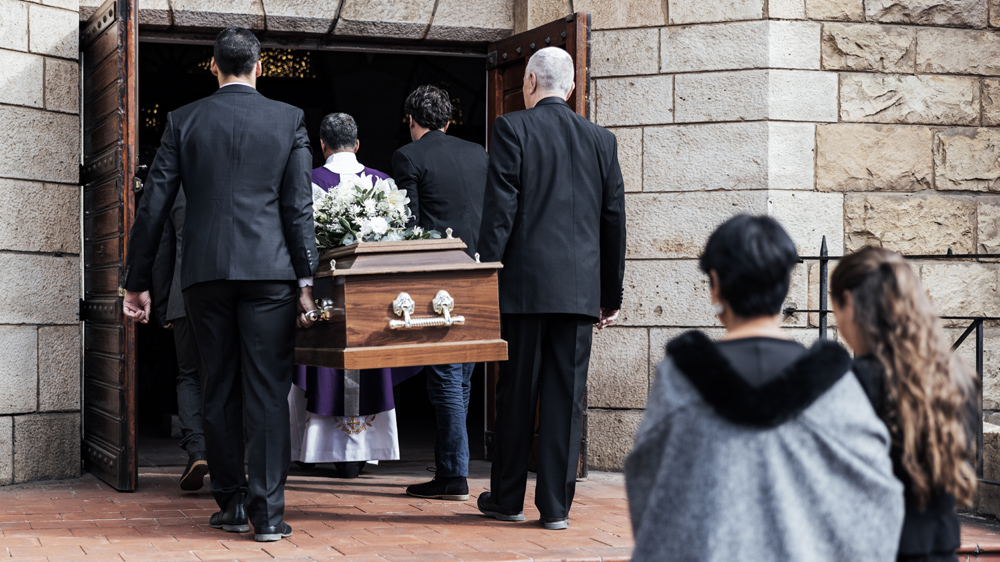
Walking Together Through Grief: The Parish Consolation Team
When a loved one or close friend dies, there are many practical matters to deal with – giving notice of death, funeral arrangements, and all manner of things that are very emotional and very clinical in some ways. More often than not, you’re shell-shocked, not quite yourself. It’s a very difficult time.
At the Catholic parish of Our Lady Star of the Sea in Whitley Bay near Newcastle, they have developed something special: a Consolation Team that walks alongside grieving families during one of life’s most challenging moments.
Beyond “Leave It to Father”
Monsignor Andrew Faley, the parish priest, explains what people are looking for when they come during bereavement: “They’re looking for a sense of direction. They’re also looking for somebody to walk with them along a path that they generally would prefer not to have to walk along.”
In many churches around the country, there’s that “leave it to father” type of approach. But in 2013, when Father Andrew arrived at what was then three separate parishes, he recognised an opportunity for something different – a more collaborative ministry that could better serve the local community.
Building on Relationships
The Consolation Team grew naturally from the parish’s pastoral care work. Father Andrew recalls being befriended by the pastoral care team at Immaculate Heart Church, who took him along to visit the sick and dying. “They’d got to know them very well over the months or years of their illness,” he explains.
What naturally developed was that when someone died, the priest was not alone in preparing the funeral. The lay minister who had been visiting was there as well. “It was a huge help because I knew no one really. And they knew them very well.”
For families, having someone present who they already knew helped to calm and settle them to the task of preparing their loved one’s funeral.
Joe James, who leads the Consolation Team, explains the value of having lay people involved: “A lot of the majority of the families or the majority of the funerals that we were helping to prepare, the people were not church people at all, or had a vague child memory of church.”
Having team members sit with families over a cup of tea, talking through the life and dying of the person whose funeral they were preparing, created a more relaxing approach. “It made it more horizontal, more level,” Father Andrew notes, “instead of them feeling that they were being got at by yet another professional.”
The team goes in at a much more levelled level – not with a collar on or dressed in black – just helping and supporting.
The Details Matter
Pauline, another team member, highlights one of the practical ways they help: “We provide an order of service for the family free of charge, printed in the parish on a digital printer, so that they get a crisp, good, as many copies as they want.”
Sometimes families have everything sorted out – they know what readings they want, what hymns. Other times it’s completely the opposite and people really don’t know where to start. Joe has created a list of readings normally given at funerals with a little explanation about what they’re about.
“It’s amazing the number of times people who really didn’t think they had much idea of where to start, they’ll just look down the list of readings, they’ll see something in the little paragraph that Jo’s written, and it’ll just strike them as being very appropriate for the person that’s just died.”
Present in the Moment
During funeral services, team members position themselves where they have direct eye contact with the family. “We tell them beforehand if there’s anything you want, anything you need, just look across, we’ll be keeping an eye on you,” Joe explains.
They are ready to step up if someone who was going to lead the bidding prayers feels they can’t, or if someone needs a glass of water. They are there at the family’s beck and call for anything needed during the service.
Three Essential Elements
Father Andrew identifies three things the team does so well: “It’s about the liturgical, the pastoral, and the practical aspects of supporting families. It’s not just about one – it never can be, it never should be.”
The team often reflects that if they’re able to help prepare a good funeral, the family will never forget it, nor will the people who are there in the church to support them. The work and effort they put in isn’t about performance – it’s about appreciation of the people they’re supporting.
Words of Encouragement
For anyone considering joining or starting a Parish Consolation Team, Pauline offers simple but powerful advice: “Just go and have a go. You’re perhaps thinking that you don’t have anything to offer, but I think really you just need to go and listen and be with people. And I’m sure people can do that, even if they don’t realise it. And it’s very rewarding.”
Simply being with people – that’s what it comes down to.
A Template for Others
The Consolation Team at Our Lady Star of the Sea represents wonderful collaborative ministry at the service of the local community. Parishioners tend to have been in parishes rather longer than priests, and relationships have often built up which can be very useful and helpful in supporting grieving families.
It’s generous of families to allow the team into such difficult situations, and team members consistently find the experience uplifting – seeing people of great faith coping during challenging times, and learning about the lives of those who have died through the eulogies at services.
As Father Andrew concludes: “We generally share a deep sense of appreciation as well as respect for the family, whoever they are, whatever their circumstances. We have a much deeper appreciation of what it means to be people, human beings, called to whatever shred of faith we might be celebrating with the family or the abundance of faith that we’re celebrating with the family at this very important moment.”